Academic Activities
We require the services of an ATLAS.ti consultant to assist with analysing qualitative data. If you know of any specialist, kindly provide us with their contact details.
Kindly contact Raj Mestry (email: rajm@uj.ac.za)
AD Scientific Index: Top 100 Education Scientists in South Africa
The link below provides the latest AD Scientific Index rankings for the Top 100 researchers in South Africa specifically within the field of Education, filtered by their 5-year h-index and citation metrics.
18 March 2026 - Recording from the recent Teach4Reach 2.0 presentation to the Austrian Society for Research and Development in Education (ÖFEB)
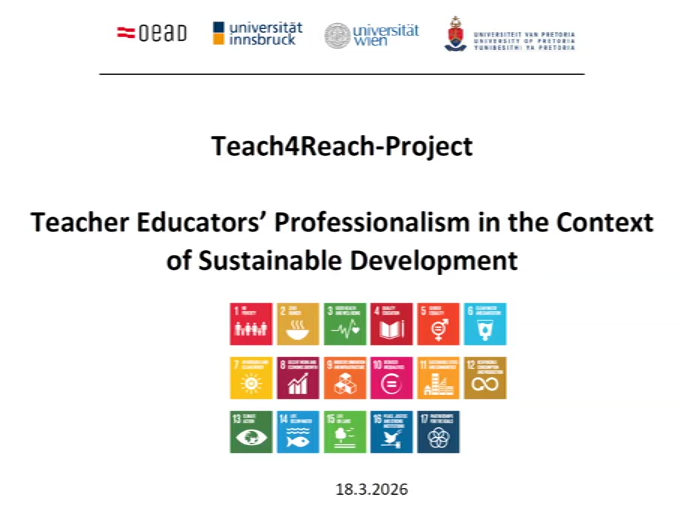
Recording from the recent Teach4Reach 2.0 presentation to the Austrian Society for Research and Development in Education (ÖFEB):
https://www.uibk.ac.at/de/projects/teach4reach/publications/
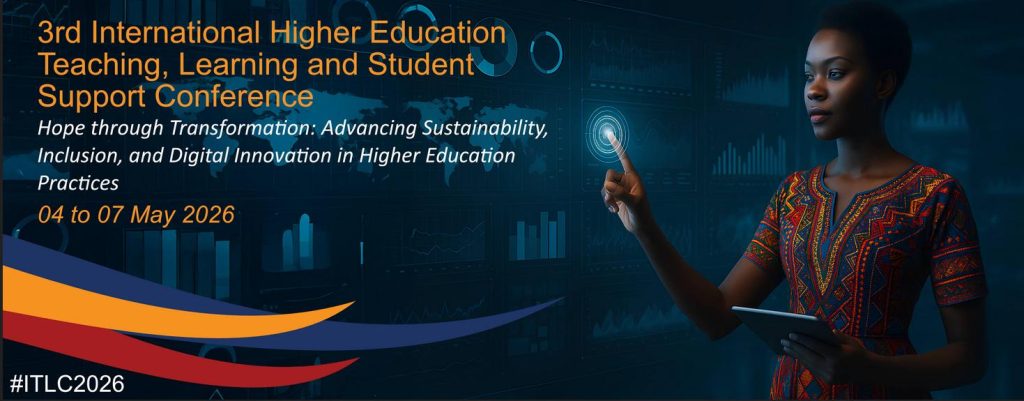
4–7 May 2026 - 3rd International Higher Education Teaching, Learning and Student Support Conference (ITLC 2026)
policymakers to engage critically with evolving challenges and opportunities in teaching, learning, and student support.
Building on ITLC 2025, the 2026 conference explores how institutions can transform moments of crisis and vulnerability
into opportunities for innovation, inclusion, and hope, with a focus on leveraging digital technologies and AI to create
accessible, equitable learning environments.
Purpose
viewed holistically, encompassing environmental considerations, pedagogical practices, institutional resilience, and
long-term well-being of students and staff.
Transformation includes reimagining curricula, policies, and institutional cultures to foster inclusivity, decolonisation,
and human-centred innovation.
Objectives
- Stimulate dialogue on integrating sustainability, transformation, and holistic well-being into curricula and institutional practice.
- Encourage collaboration across institutions, industry, and stakeholders to co-create solutions that support inclusion and well-being.
- Showcase research, innovations, and case studies in inclusive digital teaching, learning, student support, and AI-enhanced education.
- Provide professional development opportunities for human-centred, innovative, wellness-oriented teaching practices.
- Build on lessons from ITLC 2025 and support collaborative research initiatives emerging from conference deliberations.
Conference Tracks and Themes
Artificial Intelligence and the Future of Education
- Integrating AI into teaching, learning, and assessment
- Ethical and responsible use of AI in higher education
- AI for student support and personalised learning pathways
Immersive and Experiential Learning Environments
- Virtual, augmented, and mixed reality for higher education
- Simulation and gamification for deeper engagement
- Creating hybrid immersive learning spaces
Student Digital Resilience and Well-Being
- Supporting student mental health in digital-first universities
- Equity and access in the face of digital divides
- Resilience for lifelong learning in fast-changing tech landscapes
Inclusive and Decolonial Pedagogies in a Digital Age
- African perspectives in digital teaching and learning
- Culturally responsive teaching and learning
- Redefining knowledge systems for global equity
Reimagining Teaching, Learning, and Support Ecosystems
- Learning analytics and data-driven decision-making for student support
- New roles for academic staff in digitally transformed universities
- Human-centred student support systems
- Future literacies: inclusive language, disability access, digital, ethical, social and global literacies
Sustainability, Green Technologies, and the Future of Higher Education
- Eco-friendly digital infrastructures
- Linking education technology to the UN Sustainable Development Goals
- Responsible innovation for a just and sustainable future
Translanguaging in Higher Education
- Pedagogical strategies for translanguaging
- Language inclusion and equity
- Digital tools and AI for multilingual learning
- Africanisation of language practices
- Fair assessment of multilingual students while promoting translanguaging
- Evidence-based studies on learning outcomes, engagement, and well-being
Curriculum/Scholarship of Transformation and Abundance Intelligence
- Embedding African knowledge systems, values, and perspectives in curricula and institutional practices
- Addressing access, diversity, and social justice in African higher education
- Leveraging technology to drive transformation in teaching, learning, and research
- Integrating environmental, institutional, and pedagogical sustainability in African contexts
- Supporting student, academic, and staff wellness as part of transformational initiatives
- Developing policies that drive African transformation in higher education
- Integrating AI/digital tools to create inclusive, accessible learning environments
- Showcasing best practices enhancing educational outcomes and promoting Africanisation
Conference Website
workshops, poster sessions, and networking opportunities.
Post-conference workshops will focus on:
- Transformation (institutional and curriculum)
- Translanguaging and multilingualism
- Human-centred student support
- AI-enhanced teaching and learning
Target Audience
- HE faculty and administrators
- Educational researchers
- Policymakers
- Student support professionals
- Graduate students
- Educational technology developers
- NGOs involved in education
Expected Outcomes
- Develop and disseminate a policy brief to guide decision-making and inform practice
- Create networking opportunities to strengthen professional and institutional linkages
- Establish collaborations to enhance research, teaching, and innovation
- Form communities of practice to facilitate knowledge exchange and shared learning
- Publish a special edition of a DHET-accredited journal showcasing scholarly contributions
Abstract & Proposal Submission
and student support that harness AI, digital technologies, inclusivity, sustainability, and human-centred innovation.
Submission Categories
- Academic Papers: Research-based or conceptual papers (max 3,500 words incl. abstract, figures, tables, references)
- Academic Posters: Visual displays of research outcomes, pilot projects, or institutional innovations
- Academic Presentations: Slide presentations summarising practices, findings, or reflective insights
- Workshops/Interactive Sessions: 60–90 minute hands-on, collaborative, or experiential sessions
Formatting & Review
- Use clear academic English, 1.5 line spacing, consistent referencing (APA 7 preferred)
- Embed and caption all figures/tables/visuals
- Double-blind peer review; revisions expected after reviewer feedback
- Ethical considerations must be stated (clearance/consent where applicable)
Important dates
| Milestone | Date |
|---|---|
| Call for Abstracts Opens | 01 December 2025 |
| Second Call for Abstracts Opens | 12 January 2026 |
| Abstract Submission Deadline | 14 March 2026 |
| Notification of Abstract Acceptance | 28 March 2026 |
| Early-bird Registration | 12 January – 16 March 2026 |
| Regular Registration | 16 March – 17 April 2026 |
| Conference Dates | 04 – 07 May 2026 |
Note: Respect submission deadlines as communicated on the official conference website. Late or incomplete submissions will not be considered.
Sponsorship Enquiries
Ms Lynette van Niekerk
Department of Institutional Advancement
Tel: 012 441 5830 • Cell: 082 599 7266
Email: Vniekl1@unisa.ac.za
Mr Lloyd R Modjadji
Department of Institutional Advancement
Development Officer, Unisa Foundation and Alumni Relations
Tel: 012 441 5686 • Cell: 084 583 3992
Email: Modjalr@unisa.ac.za
18 February 2026 - The Centre for Evaluation and Assessment (CEA) - Webinar
The Centre for Evaluation and Assessment (CEA) cordially invites you to the webinar scheduled as follows:
Date: 18 February 2026
Time: 12:30 – 13:30
Theme: From linear systems to anticipatory governance: The Diamond Framework for Futures-Ready Education
Venue: Virtual
Presenter: Christo Becker
18 March 2026 (16:00 – 17:30) the UP Teach4Reach team will be presenting to The Austrian Society for Research and Development in Education (ÖFEB)
On 18 March 2026 (16:00 – 17:30) the UP Teach4Reach team will be presenting to The Austrian Society for Research and Development in Education (ÖFEB) (https://oefeb.at/) on the conclusion of the project on ‘Teacher Educators’ Professionalism in the Context of Sustainable Development’. All teacher educators are welcome to attend, it is free and no registration is required. The presentation will be in English.
Zoom link to this event : https://jku.zoom.us/j/
Conference and Debate 22-23 May 2025: The Viability of Using LLMs in Higher Education
Keynote and debates
Papers
5 - 7 November 2025 - 8th International Self-Directed Learning (SDL) Conference
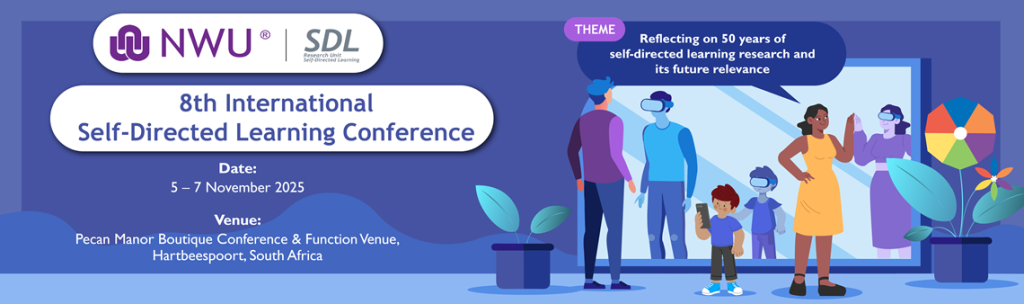
Click to visit the NWU site to find out more!
Date: 5 – 7 November 2025
Venue: Pecan Manor Boutique Conference & Function Venue, Hartbeespoort, South Africa.
Theme: Reflecting on 50 years of self-directed learning research and its future relevance
In 1975 Malcolm Knowles published the book “Self-directed learning: A guide for learners and teachers”. Knowles referred to Alvin Toffler, an American futurist, who defined the term “future shock” – “too much change in too short period of time”. To prepare for the “future shock”, Knowles called for a renewed emphasis on learning and defined the process of self-directed learning (SDL). Now, 50 years later, we invite educators and researchers to reflect on the legacy of SDL and its future relevance.
The 8th International Self-Directed Learning Conference provides a platform to present innovative research on SDL and generate ideas for future research. The conference serves as an ideal opportunity to collaborate with fellow researchers and educators on promoting SDL in education and in all walks of life, on developing theories and models for SDL, and keeping learning relevant in a “future shock” world infused by generative AI. Join us for an enriching gathering of researchers, educators, and enthusiasts dedicated to promoting SDL to shape the future of learning.
Conference theme and subthemes:
Reflecting on 50 years of self-directed learning research and its future relevance
Scholarship and praxis for SDL
Multimodal learning and open educational resources to enhance SDL
Indigenous knowledge and contextualised learning to enhance SDL
Play-based self-directed learning
Assessment to support SDL
Blended learning to support SDL
Cognition and metacognition to enhance SDL
Cooperative and problem-based learning to enhance SDL
Save the Date: WERA Task Force Global Research in Extended Education Conference 2025
Mark your calendars for this exciting event where we will gather to explore cutting-edge research and ideas on “Extended Education in the Future – Possibilities and Challenges”.
Click for more info : PDF
A Call for Papers for Special Issue - Journal of Teaching and Learning (2025)
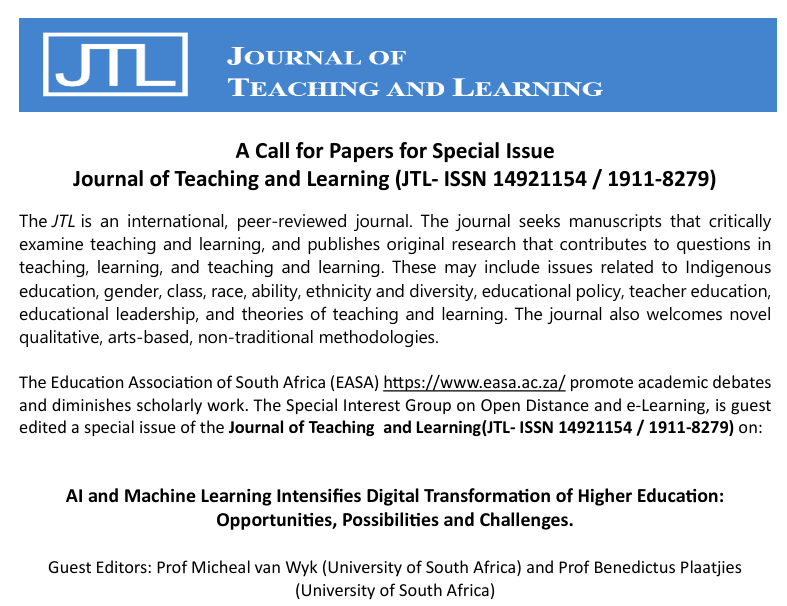
For more information : (PDF)
Call for abstracts : 10th Flexible Futures 2024 - Higher Education Innovation Conference - 20 -21 August 2024 | Future Africa Institute, University of Pretoria
The University of Pretoria is delighted to announce the upcoming conference on re-imagining assessment in higher education, which will be held at the Future Africa Institute of the University of Pretoria on 20 and21 August 2024.
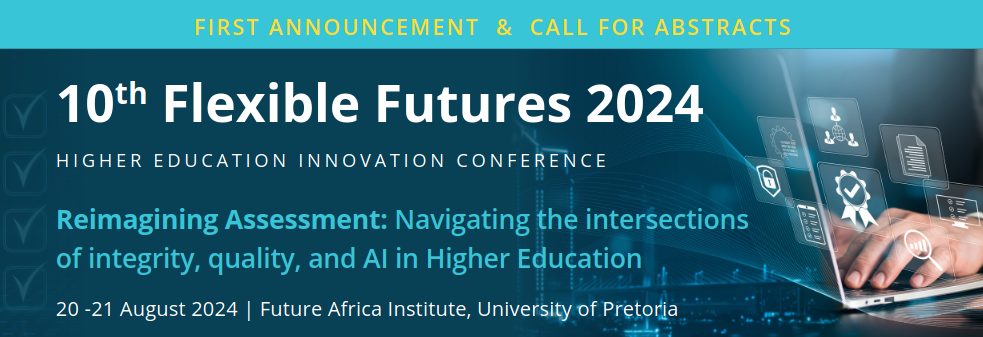
Drawing on the valuable insights and experiences from previous Flexible Futures conferences, we are excited to extend invitations to researchers, practitioners, and industry professionals passionate about teaching innovation to explore and rethink assessment in higher education.The conference theme, “Reimagining Assessment: Navigating the intersections of integrity, quality, and Artificial Intelligence (AI) in Higher Education,” aims to address the evolving landscape of assessment practices in the age of AI. As we navigate this new era, it is essential to explore the opportunities and challenges presented by integrating AI in assessment strategies. This conference provides a platform for educators, researchers, and professionals to engage in meaningful discussions, share innovative ideas, and collaboratively shape the future of assessment in higher education. We invite you to submit papers that align with the various sub-themes of the conference.
Key dates:
• 22 March 2024: Abstract submission opens
• 10 May 2024: Online registration opens
• 7 June 2024: Abstract submission deadline
• 28 June 2024: Notification of acceptance
• 17 July 2024: Provisional programme available
• 8 August 2024: Online registration closes
• 20 – 21 August 2024: Conference dates
Call for Book Chapters: PHILOSOPHICALLY (RE)IMAGING EDUCATIONAL LEADERSHIP IN THE AGE OF CONNECTIVITY AND 4IR
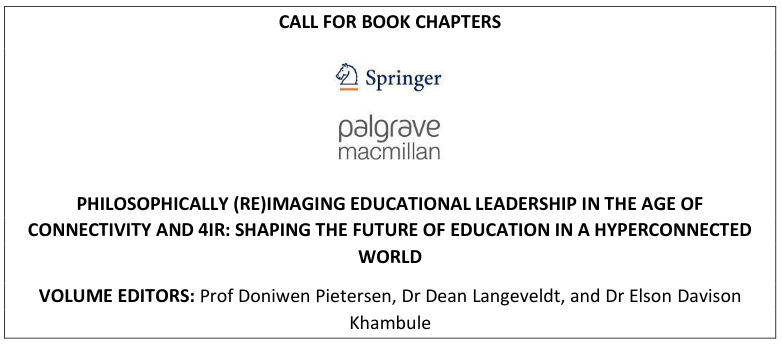
Click for more information : PDF
Call for abstracts : Africa Education Leadership Round Table (AELRT) 2024 - 17-18 September 2024
UJ – MIE 2024
The University of Johannesburg (UJ) and The Mauritius Institute of Education (MIE) jointly invite you to the Africa Education Leadership Round Table (AELRT) 2024.
1st Call for Abstracts
Theme: Evolving the education leadership and management landscape in Africa: Towards school effectiveness, improvement, and sustainability
Date: 17-18 September 2024
Mode: Hybrid
Venue: Mauritius Institute of Education, Moka, Mauritius
Organisers: Department of Education Leadership and Management (DELM), University of Johannesburg, South Africa, and Higher Studies Cell, Mauritius
Institute of Education (MIE), Moka, Mauritius.
Call for papers - 2024 International Teaching and Learning Conference (6-10 May 2024)
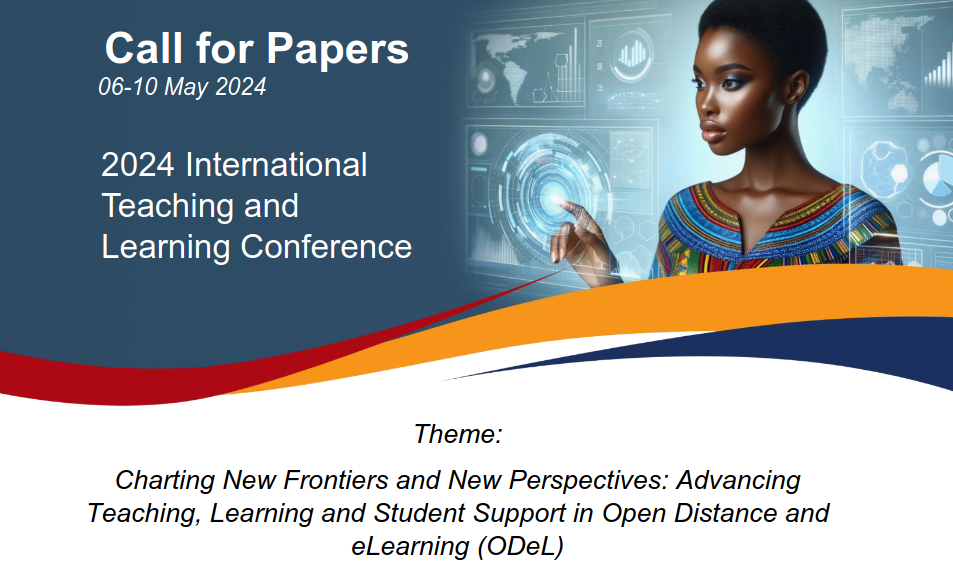
Click to download PDF for more information.
Prof. Fumane Portia Khanare, President of the Education Association of South Africa (EASA), will serve as Keynote Speaker for CIMIE 2024’s Closing Session on 5 July
The Multidisciplinary Educational Research Association (AMIE) in Spain is holding its annual CIMIE Congress on 4-5 July 2024 at the University of Granada, Spain, and online via Zoom.
Prof. Fumane Portia Khanare, President of the Education Association of South Africa (EASA), will serve as Keynote Speaker for CIMIE 2024’s Closing Session on 5 July with the theme “Respice Prospice: Towards Sustainable Care and Support with Youth in the Global South.”
CIMIE gathers approximately 1000 participants annually over two days to discuss scientific evidence in education. This year’s theme is “Science, Education, and Cultural Dialogue: Bridging Divides, Building Connections.”
18 March 2026 - Recording from the Recording from the recent Teach4Reach 2.0 presentation to the Austrian Society for Research and Development in Education (ÖFEB)
Recording from the recent Teach4Reach 2.0 presentation to the Austrian Society for Research and Development in Education (ÖFEB):
https://www.uibk.ac.at/de/projects/teach4reach/publications/
4–7 May 2026 - 3rd International Higher Education Teaching, Learning and Student Support Conference (ITLC 2026)
policymakers to engage critically with evolving challenges and opportunities in teaching, learning, and student support.
Building on ITLC 2025, the 2026 conference explores how institutions can transform moments of crisis and vulnerability
into opportunities for innovation, inclusion, and hope, with a focus on leveraging digital technologies and AI to create
accessible, equitable learning environments.
Purpose
viewed holistically, encompassing environmental considerations, pedagogical practices, institutional resilience, and
long-term well-being of students and staff.
Transformation includes reimagining curricula, policies, and institutional cultures to foster inclusivity, decolonisation,
and human-centred innovation.
Objectives
- Stimulate dialogue on integrating sustainability, transformation, and holistic well-being into curricula and institutional practice.
- Encourage collaboration across institutions, industry, and stakeholders to co-create solutions that support inclusion and well-being.
- Showcase research, innovations, and case studies in inclusive digital teaching, learning, student support, and AI-enhanced education.
- Provide professional development opportunities for human-centred, innovative, wellness-oriented teaching practices.
- Build on lessons from ITLC 2025 and support collaborative research initiatives emerging from conference deliberations.
Conference Tracks and Themes
Artificial Intelligence and the Future of Education
- Integrating AI into teaching, learning, and assessment
- Ethical and responsible use of AI in higher education
- AI for student support and personalised learning pathways
Immersive and Experiential Learning Environments
- Virtual, augmented, and mixed reality for higher education
- Simulation and gamification for deeper engagement
- Creating hybrid immersive learning spaces
Student Digital Resilience and Well-Being
- Supporting student mental health in digital-first universities
- Equity and access in the face of digital divides
- Resilience for lifelong learning in fast-changing tech landscapes
Inclusive and Decolonial Pedagogies in a Digital Age
- African perspectives in digital teaching and learning
- Culturally responsive teaching and learning
- Redefining knowledge systems for global equity
Reimagining Teaching, Learning, and Support Ecosystems
- Learning analytics and data-driven decision-making for student support
- New roles for academic staff in digitally transformed universities
- Human-centred student support systems
- Future literacies: inclusive language, disability access, digital, ethical, social and global literacies
Sustainability, Green Technologies, and the Future of Higher Education
- Eco-friendly digital infrastructures
- Linking education technology to the UN Sustainable Development Goals
- Responsible innovation for a just and sustainable future
Translanguaging in Higher Education
- Pedagogical strategies for translanguaging
- Language inclusion and equity
- Digital tools and AI for multilingual learning
- Africanisation of language practices
- Fair assessment of multilingual students while promoting translanguaging
- Evidence-based studies on learning outcomes, engagement, and well-being
Curriculum/Scholarship of Transformation and Abundance Intelligence
- Embedding African knowledge systems, values, and perspectives in curricula and institutional practices
- Addressing access, diversity, and social justice in African higher education
- Leveraging technology to drive transformation in teaching, learning, and research
- Integrating environmental, institutional, and pedagogical sustainability in African contexts
- Supporting student, academic, and staff wellness as part of transformational initiatives
- Developing policies that drive African transformation in higher education
- Integrating AI/digital tools to create inclusive, accessible learning environments
- Showcasing best practices enhancing educational outcomes and promoting Africanisation
Conference Website
workshops, poster sessions, and networking opportunities.
Post-conference workshops will focus on:
- Transformation (institutional and curriculum)
- Translanguaging and multilingualism
- Human-centred student support
- AI-enhanced teaching and learning
Target Audience
- HE faculty and administrators
- Educational researchers
- Policymakers
- Student support professionals
- Graduate students
- Educational technology developers
- NGOs involved in education
Expected Outcomes
- Develop and disseminate a policy brief to guide decision-making and inform practice
- Create networking opportunities to strengthen professional and institutional linkages
- Establish collaborations to enhance research, teaching, and innovation
- Form communities of practice to facilitate knowledge exchange and shared learning
- Publish a special edition of a DHET-accredited journal showcasing scholarly contributions
Abstract & Proposal Submission
and student support that harness AI, digital technologies, inclusivity, sustainability, and human-centred innovation.
Submission Categories
- Academic Papers: Research-based or conceptual papers (max 3,500 words incl. abstract, figures, tables, references)
- Academic Posters: Visual displays of research outcomes, pilot projects, or institutional innovations
- Academic Presentations: Slide presentations summarising practices, findings, or reflective insights
- Workshops/Interactive Sessions: 60–90 minute hands-on, collaborative, or experiential sessions
Formatting & Review
- Use clear academic English, 1.5 line spacing, consistent referencing (APA 7 preferred)
- Embed and caption all figures/tables/visuals
- Double-blind peer review; revisions expected after reviewer feedback
- Ethical considerations must be stated (clearance/consent where applicable)
Important dates
| Milestone | Date |
|---|---|
| Call for Abstracts Opens | 01 December 2025 |
| Second Call for Abstracts Opens | 12 January 2026 |
| Abstract Submission Deadline | 14 March 2026 |
| Notification of Abstract Acceptance | 28 March 2026 |
| Early-bird Registration | 12 January – 16 March 2026 |
| Regular Registration | 16 March – 17 April 2026 |
| Conference Dates | 04 – 07 May 2026 |
Note: Respect submission deadlines as communicated on the official conference website. Late or incomplete submissions will not be considered.
Sponsorship Enquiries
Ms Lynette van Niekerk
Department of Institutional Advancement
Tel: 012 441 5830 • Cell: 082 599 7266
Email: Vniekl1@unisa.ac.za
Mr Lloyd R Modjadji
Department of Institutional Advancement
Development Officer, Unisa Foundation and Alumni Relations
Tel: 012 441 5686 • Cell: 084 583 3992
Email: Modjalr@unisa.ac.za
18 March 2026 (16:00 – 17:30) the UP Teach4Reach team will be presenting to The Austrian Society for Research and Development in Education (ÖFEB)
On 18 March 2026 (16:00 – 17:30) the UP Teach4Reach team will be presenting to The Austrian Society for Research and Development in Education (ÖFEB) (https://oefeb.at/) on the conclusion of the project on ‘Teacher Educators’ Professionalism in the Context of Sustainable Development’. All teacher educators are welcome to attend, it is free and no registration is required. The presentation will be in English.
Zoom link to this event : https://jku.zoom.us/j/
18 February 2026 - The Centre for Evaluation and Assessment (CEA) - Webinar
The Centre for Evaluation and Assessment (CEA) cordially invites you to the webinar scheduled as follows:
Date: 18 February 2026
Time: 12:30 – 13:30
Theme: From linear systems to anticipatory governance: The Diamond Framework for Futures-Ready Education
Venue: Virtual
Presenter: Christo Becker
Conference and Debate 22-23 May 2025: The Viability of Using LLMs in Higher Education
Keynote and debates
Papers
5 - 7 November 2025 - 8th International Self-Directed Learning (SDL) Conference
Click to visit the NWU site to find out more!
Date: 5 – 7 November 2025
Venue: Pecan Manor Boutique Conference & Function Venue, Hartbeespoort, South Africa.
Theme: Reflecting on 50 years of self-directed learning research and its future relevance
In 1975 Malcolm Knowles published the book “Self-directed learning: A guide for learners and teachers”. Knowles referred to Alvin Toffler, an American futurist, who defined the term “future shock” – “too much change in too short period of time”. To prepare for the “future shock”, Knowles called for a renewed emphasis on learning and defined the process of self-directed learning (SDL). Now, 50 years later, we invite educators and researchers to reflect on the legacy of SDL and its future relevance.
The 8th International Self-Directed Learning Conference provides a platform to present innovative research on SDL and generate ideas for future research. The conference serves as an ideal opportunity to collaborate with fellow researchers and educators on promoting SDL in education and in all walks of life, on developing theories and models for SDL, and keeping learning relevant in a “future shock” world infused by generative AI. Join us for an enriching gathering of researchers, educators, and enthusiasts dedicated to promoting SDL to shape the future of learning.
Conference theme and subthemes:
Reflecting on 50 years of self-directed learning research and its future relevance
Scholarship and praxis for SDL
Multimodal learning and open educational resources to enhance SDL
Indigenous knowledge and contextualised learning to enhance SDL
Play-based self-directed learning
Assessment to support SDL
Blended learning to support SDL
Cognition and metacognition to enhance SDL
Cooperative and problem-based learning to enhance SDL
A Call for Papers for Special Issue - Journal of Teaching and Learning (2025)
For more information : (PDF)
Save the Date: WERA Task Force Global Research in Extended Education Conference 2025
Mark your calendars for this exciting event where we will gather to explore cutting-edge research and ideas on “Extended Education in the Future – Possibilities and Challenges”.
Click for more info : PDF
Call for Book Chapters: PHILOSOPHICALLY (RE)IMAGING EDUCATIONAL LEADERSHIP IN THE AGE OF CONNECTIVITY AND 4IR
Click for more information : PDF
Call for abstracts : 10th Flexible Futures 2024 - Higher Education Innovation Conference - 20 -21 August 2024 | Future Africa Institute, University of Pretoria
The University of Pretoria is delighted to announce the upcoming conference on re-imagining assessment in higher education, which will be held at the Future Africa Institute of the University of Pretoria on 20 and21 August 2024.
Drawing on the valuable insights and experiences from previous Flexible Futures conferences, we are excited to extend invitations to researchers, practitioners, and industry professionals passionate about teaching innovation to explore and rethink assessment in higher education.The conference theme, “Reimagining Assessment: Navigating the intersections of integrity, quality, and Artificial Intelligence (AI) in Higher Education,” aims to address the evolving landscape of assessment practices in the age of AI. As we navigate this new era, it is essential to explore the opportunities and challenges presented by integrating AI in assessment strategies. This conference provides a platform for educators, researchers, and professionals to engage in meaningful discussions, share innovative ideas, and collaboratively shape the future of assessment in higher education. We invite you to submit papers that align with the various sub-themes of the conference.
Key dates:
• 22 March 2024: Abstract submission opens
• 10 May 2024: Online registration opens
• 7 June 2024: Abstract submission deadline
• 28 June 2024: Notification of acceptance
• 17 July 2024: Provisional programme available
• 8 August 2024: Online registration closes
• 20 – 21 August 2024: Conference dates
Call for abstracts : Africa Education Leadership Round Table (AELRT) 2024 - 17-18 September 2024
UJ – MIE 2024
The University of Johannesburg (UJ) and The Mauritius Institute of Education (MIE) jointly invite you to the Africa Education Leadership Round Table (AELRT) 2024.
1st Call for Abstracts
Theme: Evolving the education leadership and management landscape in Africa: Towards school effectiveness, improvement, and sustainability
Date: 17-18 September 2024
Mode: Hybrid
Venue: Mauritius Institute of Education, Moka, Mauritius
Organisers: Department of Education Leadership and Management (DELM), University of Johannesburg, South Africa, and Higher Studies Cell, Mauritius
Institute of Education (MIE), Moka, Mauritius.
Call for papers - 2024 International Teaching and Learning Conference (6-10 May 2024)
Click to download PDF for more information.
Prof. Fumane Portia Khanare, President of the Education Association of South Africa (EASA), will serve as Keynote Speaker for CIMIE 2024’s Closing Session on 5 July
The Multidisciplinary Educational Research Association (AMIE) in Spain is holding its annual CIMIE Congress on 4-5 July 2024 at the University of Granada, Spain, and online via Zoom.
Prof. Fumane Portia Khanare, President of the Education Association of South Africa (EASA), will serve as Keynote Speaker for CIMIE 2024’s Closing Session on 5 July with the theme “Respice Prospice: Towards Sustainable Care and Support with Youth in the Global South.”
CIMIE gathers approximately 1000 participants annually over two days to discuss scientific evidence in education. This year’s theme is “Science, Education, and Cultural Dialogue: Bridging Divides, Building Connections.”